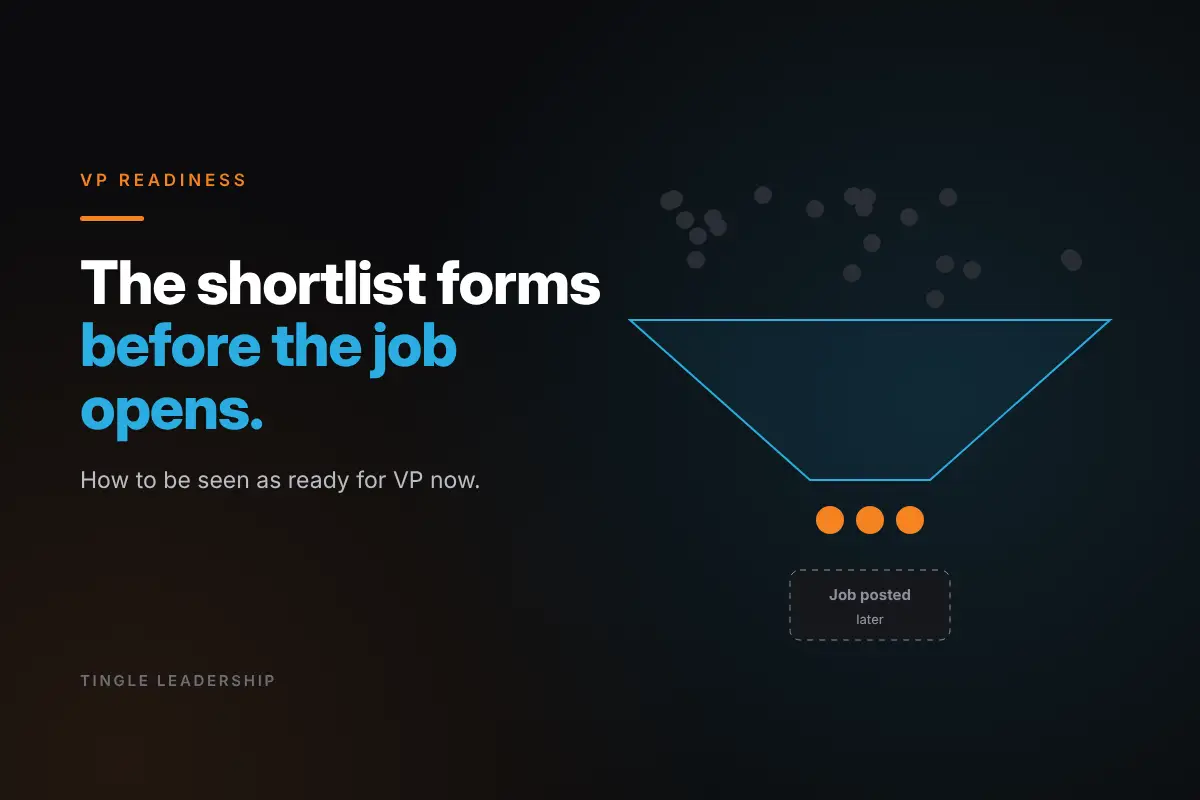
When a VP job opens up, most companies have already narrowed the field to a small group of candidates. Usually, this means two or three people, sometimes four, chosen because they are visible and seem ready.
These candidates are not surprised when they get the call. They have been working at a VP level for months or even years. The right people have noticed them, and someone influential has been mentioning their name in important meetings.
If you wait until the job is posted to start getting ready, you are already behind.
I saw this happen many times during my years as a CIO. The people who got promoted were not always the top performers. They were the ones who had already made themselves visible, valuable, and had support at the next level.
Here is what that looks like in real life.
The VP readiness shift that changes everything
Moving from Director to VP is not just a bigger version of your current job. It is a completely different role.
Directors get recognized for getting things done. VPs are recognized for results, setting direction, and making an impact across the company. This difference seems simple, but in reality, it is what keeps many strong performers from moving up.
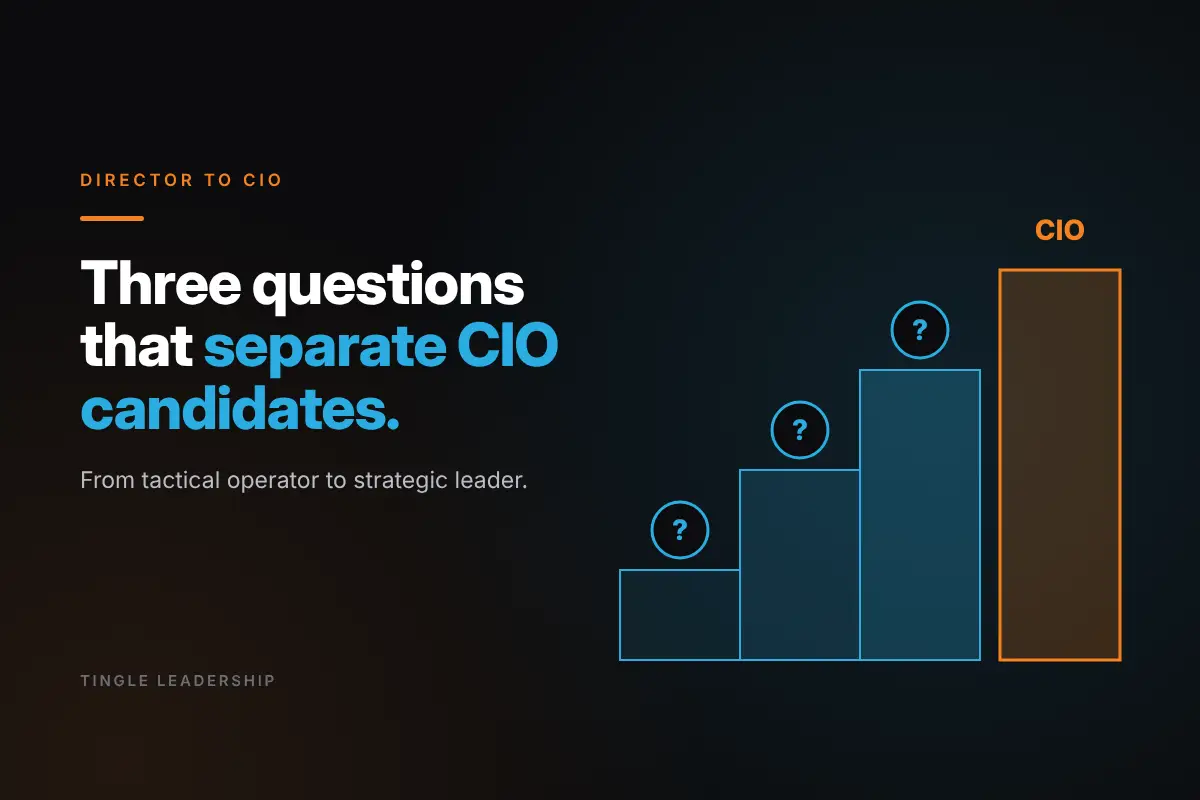
Making this move means you need to make three key changes.
Shift 1: From projects delivered to business outcomes moved
Most Directors talk about what they finished. VPs talk about what changed, like revenue, costs, risks, or customer numbers. When you start describing your work this way, you stop sounding like just an operator and start sounding like a business leader.
Ask yourself if you can link your three biggest projects directly to a company goal your CEO cares about. If you cannot, that is the place to begin.
Shift 2: From your team to the enterprise
As a Director, being an expert in your area is valuable. As a VP, what matters is your range. You need to manage work that crosses teams, involve people from other areas, and talk about the whole business, not just your part.
The fastest way to look like a VP candidate is to treat problems outside your area as your own responsibility.
Shift 3: From deliverer to sponsor magnet
Mentors offer advice, but sponsors use their influence to help you. Many top performers have mentors but not sponsors. If no one is speaking up for you when decisions are made, your achievements can be missed.
The best way to build a sponsor relationship is to do valuable work on something important to a senior leader and keep them updated as you go.
About telling people you want to be VP
Yes, you should. But be specific.
Do not just say, “I want to be VP.” That is not enough.
This works better: “In the next 18 months, I want to be ready for a VP role. What are the two biggest gaps between where I am today and what you’d need to see?”
Asking that question shows you are ambitious, self-aware, and respect their opinion. It also gives them a story to share when your name is mentioned.
Saying it once lets people know your goal. To stay on their minds, you need to keep showing VP-level actions.
Leaders who become VPs do not wait to be noticed. They are already working at that level and making sure the right people see it.
If you want to discuss your current situation and next steps, I have time for a few conversations this month.
If you are not ready for a call, you can download the Executive Freedom eBook Summary. It explains the three changes that help you move from a reliable Director to a VP-ready leader.
P.S. The Director who makes their goal clear and shows VP-level behavior is the one who gets the call. The one who waits for the job to open is the one who gets passed over again.