You can’t order a peer to prioritize your project. You cannot direct a finance partner to release your funding. You can’t instruct a business executive to change a roadmap they own.
And yet the work still has to get done. That takes influence without authority.
Many leaders respond to this by getting louder, building a better slide deck, or escalating to a sponsor. Sometimes that works. Usually it just burns the relationship you needed for the next ask.
Influence Without Authority: The Pattern
The leaders who move things without formal authority are not more persuasive. They use language differently. Here is the pattern.
1. Separate your judgment from your evidence.
“The current model has failed” is a judgment, not a fact. Said on its own, it invites a fight. Ground it first: service levels missed the target in three of the last four months, rework costs are up, and customers are escalating by name.
Now the group can test the judgment against the evidence, instead of defending a position. That is the difference between a leader who gets debated and one who gets believed.
2. Start with their concern, not your solution.
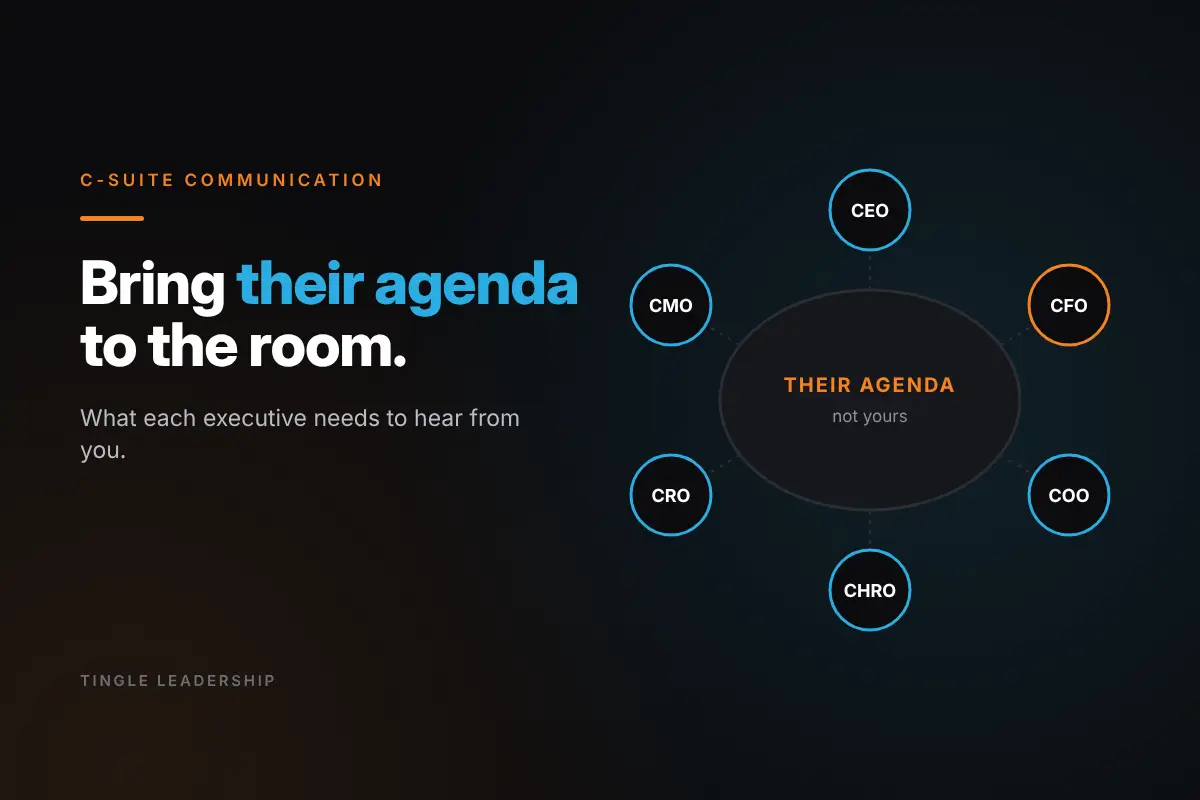
Before you ask a stakeholder for anything, name what they are actually protecting. A CFO protects capital discipline. An operations leader protects safety and reliability. If you cannot state their concern in a way they would recognize as fair, you are not ready to make the ask. You are still selling.
3. Make requests that can produce a real commitment.
“Can you help with this?” produces nothing you can hold anyone to. A request that works names the person, the action, the deadline, and what a completed job looks like. Then it leaves room for a yes, a no, or a counteroffer.
Compare:
“Can you sponsor this next quarter?”
versus
“Can you sponsor Tuesday’s working session and commit your ops lead for two weeks to design the triage criteria? We need a documented flow and a recommendation you can defend in the executive review. If Tuesday doesn’t work, what do you recommend?”
Only one of those produces a promise.
4. Build trust on three things: sincerity, competence, reliability.
People decide whether to follow you based on an assessment, not a title. Do your private and public reasons match? Can you do what you are proposing? Do you deliver what you said, when you said it? Lose any one of these and influence disappears, no matter how good the argument was.
Try this before your next cross-functional ask: write down the stakeholder’s concern in one sentence, in language they would agree is fair. If you cannot, you are not ready for the meeting.