I don’t know about you, but I’ve been reflecting on the past year, recognizing my wins, learning from my losses, and appreciating the people in my life. And on that last point, thank you for being part of my world, showing support, and giving me the opportunity to help you in some small way.
As I look ahead, I do not expect this to be a “back to normal” year, and that makes self-leadership more important than ever. It will likely bring more chaos, acceleration, and uncertainty, with AI reshaping work, roles disappearing and emerging, and organizations stripping out management layers while demanding more from fewer people. I do not hope for these conditions, yet we must be prepared if the headwinds continue.
In that environment, the most critical leadership skill is not a new technology, methodology, or framework. It is the ability to Lead the SELF, a disciplined way of observing, interpreting, assessing, designing, acting, and showing up in the world, effectively, moment by moment.
Leading our SELF means taking responsibility for our:
• Presence (communication, emotions, physical disposition)
• Stand (what you are committed to, even in a storm)
• Principles and Behaviors (what others can reliably count on from you)
Research suggests 2026 will be defined by:
• AI taking over more routine and “knowledge worker” tasks
• Ongoing restructurings, layoffs, and higher manager-to-employee ratios
• Flatter structures that ask individual contributors to operate with autonomy and act like leaders without the title.
In that world, nobody will have the time or capacity to manage people in the old sense.
You will need to:
• Notice what is changing before the memo arrives
• Anticipate second and third-order effects of AI, market moves, and internal decisions
• Adjust your behavior quickly without waiting for instructions
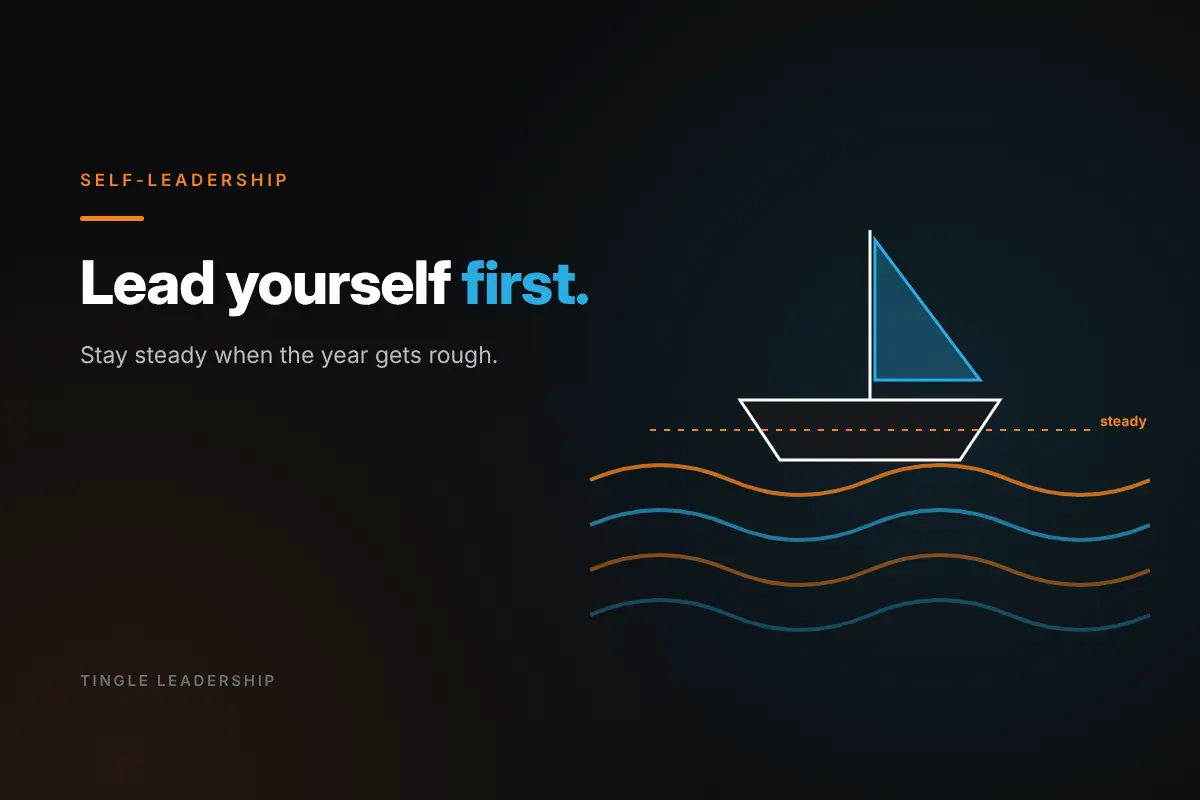
SELF-leadership becomes your steady hull in rough water.
Based on the 2026 business and technology climate, continued AI disruption, organizational flattening, role volatility, and higher autonomy demands, here are the critical self-leadership skills people will need.
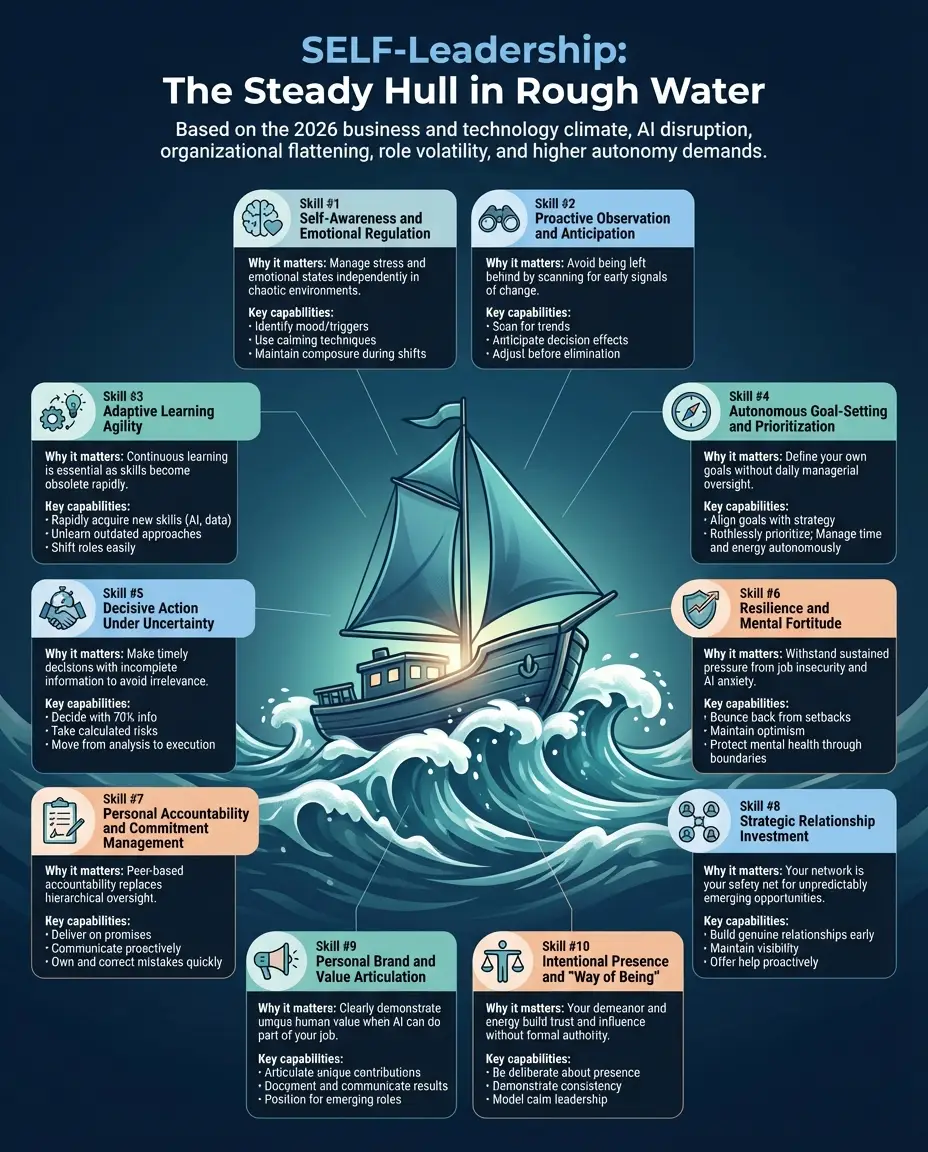
10 Critical SELF-Leadership Skills Needed in 2026
1. Self-Awareness and Emotional Regulation
2. Proactive Observation and Anticipation
3. Adaptive Learning Agility
4. Autonomous Goal-Setting and Prioritization
5. Decisive Action Under Uncertainty
6. Resilience and Mental Fortitude
7. Personal Accountability and Commitment Management
8. Strategic Relationship Investment
9. Personal Brand and Value Articulation
10. Intentional Presence and Way of Being
These are the skills we teach and coach in our Human Edge Velocity program.
Skill #1 Self-Awareness and Emotional Regulation
Why it matters:
In chaotic environments with fewer managers and constant change, you must recognize your emotional state and manage stress, anxiety, and overwhelm independently.
Key capabilities:
• Identifying your mood and emotional triggers before they derail decisions
• Using techniques such as breathing, reframing, or movement to shift from reactive to responsive states
• Maintaining composure when AI displaces roles, layoffs happen, or priorities shift overnight
Skill #2 Proactive Observation and Anticipation
Why it matters:
With rapid AI adoption and organizational restructuring, waiting for instructions means you are already behind.
Key capabilities:
• Scanning the environment for early signals of change
• Anticipating second and third-order effects of decisions
• Asking what might put your role at risk and adjusting early
Skill #3 Adaptive Learning Agility
Why it matters:
Skills that served you in 2025 may be outdated by mid 2026.
Key capabilities:
• Rapidly acquiring new technical skills
• Unlearning outdated approaches and questioning assumptions
• Shifting across roles and responsibilities without long onboarding cycles
Skill #4 Autonomous Goal-Setting and Prioritization
Why it matters:
Flatter organizations reduce day to day managerial support.
Key capabilities:
• Defining your own goals aligned with the strategy
• Prioritizing high impact work when everything feels urgent
• Managing your time and energy without external pressure
Skill #5 Decisive Action Under Uncertainty
Why it matters:
Perfect information will not arrive. Delayed action leads to irrelevance.
Key capabilities:
• Making decisions with partial information
• Taking calculated risks and learning quickly
• Moving from analysis to execution without waiting for permission
Skill #6 Resilience and Mental Fortitude
Why it matters:
Job insecurity, AI anxiety, and reorganizations create sustained pressure.
Key capabilities:
• Recovering from setbacks quickly
• Maintaining optimism during uncertainty
• Protecting your mental health through boundaries and rest
Skill #7 Personal Accountability and Commitment Management
Why it matters:
In flat structures, trust replaces oversight.
Key capabilities:
• Making clear promises and fulfilling them
• Communicating progress and blockers transparently
• Owning mistakes and correcting course quickly
Skill #8 Strategic Relationship Investment
Why it matters:
Your relationships become your safety net when roles change unpredictably.
Key capabilities:
• Building relationships across functions before you need support
• Maintaining visibility with senior leaders
• Offering help to build relationship currency
Skill #9 Personal Brand and Value Articulation
Why it matters:
As AI takes more of the workload, you must demonstrate your unique human value.
Key capabilities:
• Articulating the value you bring that AI cannot replace
• Communicating results rather than activities
• Positioning yourself for emerging roles
Skill #10 Intentional Presence and Way of Being
Why it matters:
Your presence, energy, reliability, and demeanor determine whether others trust and follow you.
Key capabilities:
• Being deliberate about how you show up
• Demonstrating consistency between values and behavior
• Modeling calm, grounded leadership in chaos
In 2026, self-leadership is not about managing yourself in stable conditions. It is about navigating chaos, reinventing continuously, and leading yourself with discipline when no one is watching. These skills separate those who thrive from those who struggle in the face of rapid change and AI disruption.
Find out more about our 6-month leadership transformation cohort,
Human Edge Velocity, where we accelerate the creation and strengthening of these skills.
Book a Call
P.S. If 2026 brings more volatility, you will not rise by working harder. You will rise by leading yourself with clarity, discipline, and intention. My goal is to support you in building these skills so you move into the new year confident, prepared, and positioned to grow no matter what changes come next.