I’d like to share a true story with you…
I’d had enough. It was time to make a point.
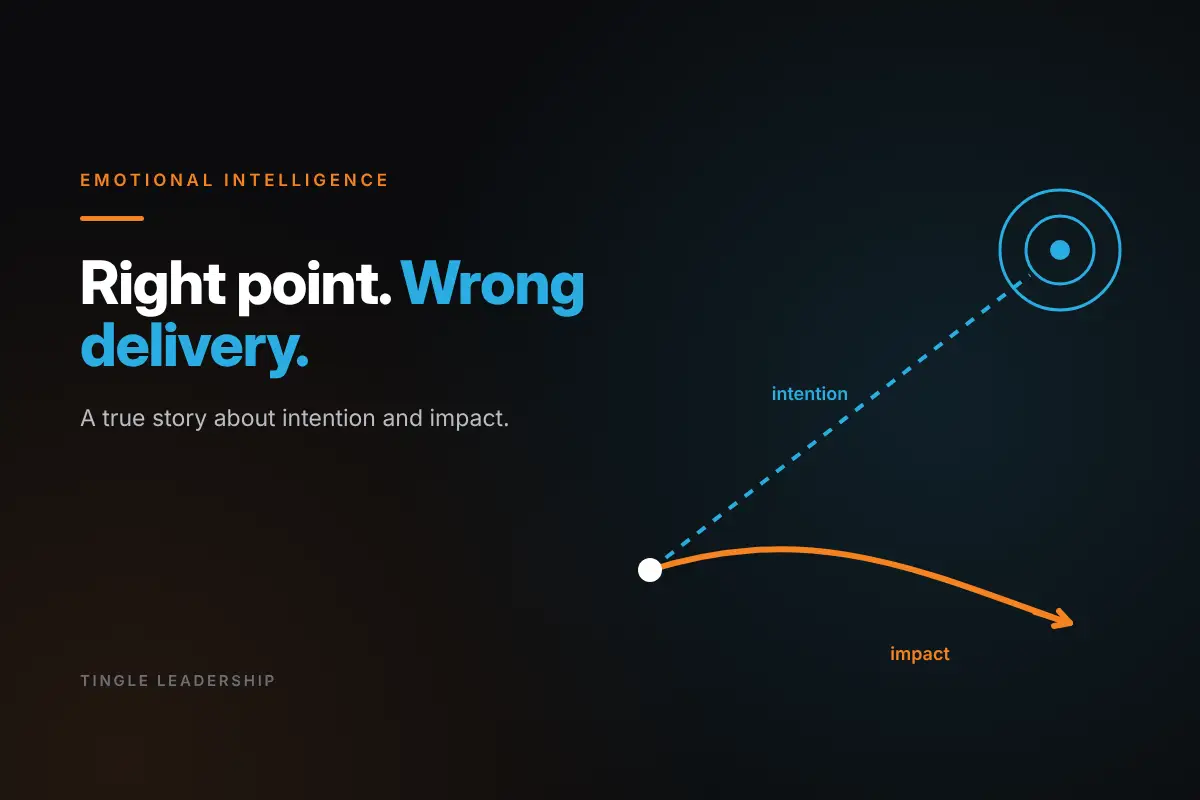
My mistake was how I made it. It was a lesson in emotional intelligence in leadership I still carry.
A few years back, a peer and project co-sponsor started steering a strategic program away from its original vision and scope. He believed he knew better than the C-suite and the steering committee. In meetings, he’d nod in agreement with their direction. The next day, he’d send the team down a completely different path.
I raised my concerns more than once. My emotions shifted from cautious cooperation to quiet frustration to sheer anger. During one team meeting, as he spoke, my patience finally snapped.
I slammed my fist on the table, stood, and pointed at him. “You will not unilaterally direct this project for your own gain. Not on my watch.” Then I walked out and slammed the door behind me.
It was a bad moment, but a recoverable one.
At that instant, I was being intentional. I wanted to make a stand. But my actions weren’t aligned with someone skilled in Emotional Intelligence.
That’s the tricky part about intentionality. It’s not just about acting on purpose; it’s about acting with purpose that reflects your values, your awareness, and your ability to manage emotion.
Intentionality and Emotional Intelligence in Leadership
Being intentional means doing things on purpose, not just reacting. In emotional intelligence (EI), it’s about using your emotions and relationships in thoughtful ways. When you act with intention, you make choices that match your values and goals.
Here’s how being intentional strengthens each part of EI:
Self-Awareness – Know what you feel and why you feel it.
- Pause and ask, “Why am I feeling this way?”
- Notice patterns that help or hurt you.
- Check if your actions fit your values.
Self-Management – Use emotions instead of letting them use you.
- Take a breath before reacting.
- Choose actions that match what matters most to you.
- Keep your focus on goals, not impulses.
Social Awareness – See the world through other people’s eyes.
- Make a real effort to understand their point of view.
- Listen for what others might be feeling or needing.
- Remember that everyone has their own reasons for what they do.
Relationship Management – Build trust and handle conflict with care.
- Speak clearly and listen with respect.
- Be kind but also honest.
- Follow through so people know they can count on you.
When you mix intention with emotional intelligence, you don’t just react to life.
You lead it calmly, clearly, and on purpose.
Reflection Questions
- When was the last time you acted with intention, but not emotional intelligence?
- Which area of Emotional Intelligence, self-awareness, self-management, social awareness, or relationship management, needs more of your deliberate focus right now?
- How might your relationships change if your intentions and emotions aligned more fully with your values?
Final Thought
Intentionality without Emotional Intelligence can turn purpose into pressure. When you slow down to align intention with awareness, your actions begin to carry both clarity and compassion.
Before you act on emotion, ask yourself: Is this reaction serving my values or just my feelings? The difference defines true leadership.
P.S. For those senior managers, directors and VPs …
Ready to Build Your Presence and Acceleration?
We are opening applications for the next Human Edge Velocity Cohort, a 6-month group coaching experience for leaders who want to accelerate promotion, influence, and impact.
This is not another webinar or online course. It is live, interactive coaching with neuroscience-backed development tools and a network of ambitious peers who grow together in real time.
Members of past cohorts have:
✅ Landed VP, CIO, CTO, and Managing Director roles
✅ Increased compensation by 35 to 70 percent
✅ Become trusted voices in executive conversations
If you are ready to strengthen your Emotional Intelligence, expand your influence, and accelerate your leadership growth, this is your next move.