You work hard and get results, but you’re not always included in important decisions. Sometimes, coworkers with less impact receive more attention, more invitations, and more opportunities. It’s not that they’re better leaders; they’re just more visible to the right people. In this edition, I’ll share how to get noticed at work: a straightforward way to think about executive visibility and one change you can try this week.
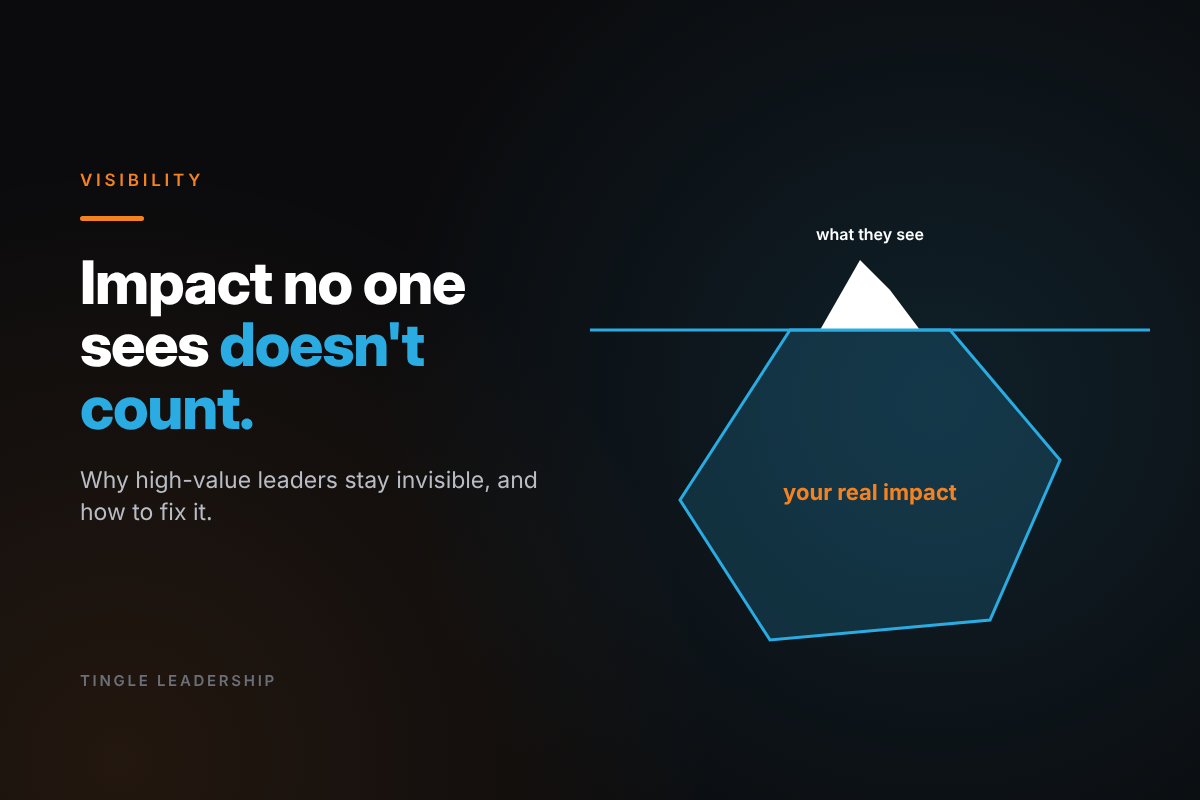
Try seeing executive visibility as a way to create future opportunities, not just as self-promotion. It’s about who notices your work, how they understand it, and whether they can explain your value when you’re not there. Many leaders think their results should speak for themselves. But strong executives make sure others notice, remember, and talk about their value. When you treat visibility as a system, you can shape your reputation intentionally rather than hoping people notice.
I once worked with a VP of Engineering who was called “the fixer,” but people didn’t see her as a strategic leader. She was always in crisis meetings, but rarely invited to early strategy sessions. When she started sharing her business results and sending them to more people, things changed. Within two quarters, she was asked for input before decisions were made, not just after problems arose.
How to Get Noticed at Work: A One-Week Exercise
If you want to try this in the next week, here’s a simple exercise:
- Write down three people whose opinions influence your career, like your boss, their boss, or an important peer or stakeholder.
- For each person, complete this sentence: “If they described my value in a meeting without me, they’d say I’m the leader who ______.”
- See if their likely description of you is too narrow, too focused on tasks, or less strategic than you’d like.
- Pick one upcoming meeting or conversation and share your update, focusing on business impact rather than just what you did. Start with “Here’s the risk reduced or opportunity created,” then explain how you made it happen.
Measure Your Executive Visibility
You can begin with this experiment, but most leaders don’t realize how visible they actually are or where their reputations are weakest. That’s why I created the Executive Visibility Scorecard, a short self-assessment that shows where you’re strong, where you’re hidden, and where you might be sending the wrong signals. It gives you a clear starting point so you can stop guessing and start being intentional about how you show up.
Take the Executive Visibility Scorecard, a 5- to 10-minute assessment that shows how clearly others see your value. Use it to find your visibility gaps and choose one area to focus on this quarter.
Request a copy of the Executive Visibility Scorecard.
The real question isn’t if your work matters. It’s whether the people who shape your future can clearly explain your value when you’re not there. This week, pay attention to where you’re hoping someone will notice your work instead of making your impact clear and easy to share. Then ask yourself: “If my visibility stayed the same for the next year, would I be happy with the opportunities that bring, or the ones I might miss?”
P.S. When you finish the Executive Visibility Scorecard, you’ll get a clear summary of your strengths and gaps, plus one suggested next step to boost your visibility without feeling fake.